

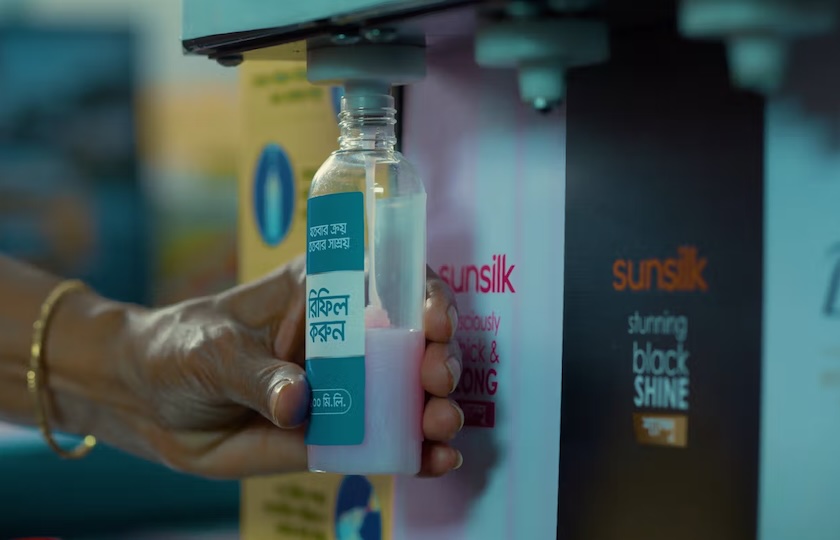
Unilever is trialling the replacement of single-use plastic packaging with refill systems for home and personal care products.
The company aims to reduce the use of new plastic, especially in markets where small, frequent purchases are common and plastic waste management remains limited.
Since 2018, Unilever has conducted more than 50 refill-and-reuse trials worldwide. These include refill machines, manual refill stations, and simple pouring systems that allow customers to buy products without new plastic bottles.
In Indonesia, the company tested several refill formats, including machines in stores and apartment buildings, and door-to-door refills delivered by motorcycle. Approximately 1000 refill points now serve an estimated 6000 customers, reducing plastic waste by several tonnes each year.
In Sri Lanka, high-tech refill machines showed potential but limited reach. The systems were later redesigned to allow customers to select exact quantities based on their needs and budgets, and were placed in accessible locations such as train stations and apartment buildings.
In Bangladesh, earlier self-service machines proved difficult to maintain. A lower-tech system was later developed to suit small shops. These machines dispense multiple products in flexible amounts, with nearly half of users returning.
According to Unilever, reuse systems need to align with local habits, infrastructure, and price expectations. Scaling these models will likely depend on broader industry cooperation and supportive regulation.
- Recommended reading: Zero Co launches first paper-based refills.
1 comment