
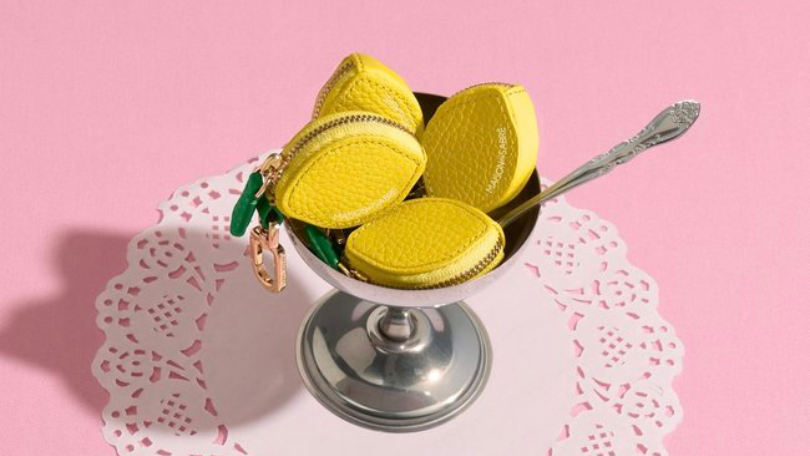
There is a phrase: If life gives you lemons, make lemonade. Maison de Sabre is taking that old adage a step further, making lemon charms from its leather scraps.
The luxury brand’s Sabremoji Lemon Fruit Charm is returning this month after being discontinued.
According to the company, the design has since appeared on resale markets for more than six times its original retail price, which actually defeats its original purpose.
“We don’t manufacture scarcity around Sabremoji. The material creates it,” says Maison de Sabre Co-founder and creative director Omar Sabré.
“We design from what exists, not from an unlimited supply chain. When the right leather runs out, the design stops. That constraint is what keeps the category dynamic.”
From handbag scraps to tiny accessories
Sabremoji launched in August 2024, giving the company another use for leather left over from its handbag production.
The charms use the same European full-grain leather found across Maison de Sabre’s handbags. At roughly 35mm wide, each one is made from small leather pieces that are precisely cut, layered and finished by hand.
The process includes techniques such as leather marquetry, knotting, embroidery and bombe shaping.
“We created Sabremoji by constraining the resource, not the imagination,” says Sabré. “That unlocked a delightful way for people to express their individuality and continually refresh the pieces they love most. For us, that is the innovation: creating newness without asking the client to start again.”
Making more use of existing materials
The charms are part of Maison de Sabre’s wider effort to use more of the raw materials already entering its supply chain.
The company says it currently utilises about 85 per cent of the raw materials it sources and diverted more than 40,000sqft of leather from landfill over the past 12 months. It is working towards 95 per cent material utilisation.
The approach also makes a business case for using leftover materials. Instead of finding a way to dispose of leather scraps, the company can turn some of them into another product and get more use from material it has already sourced.
“For circularity to work at scale, it has to make sense commercially,” says Zane.
“Sabremoji has shown us that using more of the material we already have and creating something customers genuinely want can be the same business decision.”
What Maison de Sabre is doing is not a solution to all the environmental impacts associated with leather production, but it is a useful example of a simple circular-design idea: before throwing a material away, see what else it can become.