Plastic pollution remains a major environmental challenge, but researchers at Lingnan University have developed a biodegradable plastic that can break down naturally and even repair itself when damaged.
The study – published in Nature Communications – was led by the university’s School of Interdisciplinary Studies alongside international research partners.
The new material is made from DNA–polysaccharide hydrogels derived from natural plant and biological waste sources.
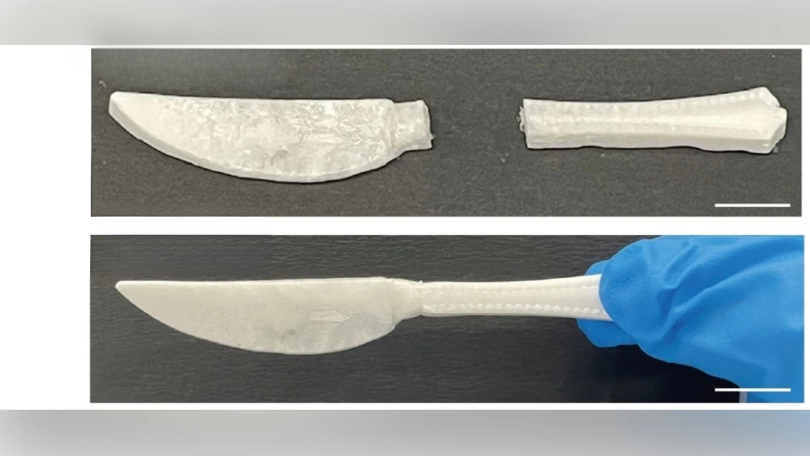
In soil simulation tests, spoons made from the material fully degraded within 29 days, while conventional polyethylene spoons remained intact.
The team says the material could help address concerns around microplastics, which form when traditional plastics break down into smaller particles that can persist in oceans, soil, and food systems.
“This material is not limited to shopping bags; it has potential applications in other plastic products, including disposable tableware,” said Chen Xi, Dean of the School of Interdisciplinary Studies at Lingnan University.
“Its molecular structure can also be precisely engineered at the nanoscale for micro-components in electronics or high-tech materials,” Xi added.
Despite being biodegradable, the material remains durable during everyday use. Researchers say it is water-resistant, compatible with common solvents such as oils and detergents, and can be processed into sheets or pellets similar to conventional plastics.
The bioplastic also has a self-healing function. Small scratches or cracks can repair themselves at room temperature with the addition of water, restoring strength without heat or chemical treatment.
The group is now exploring applications in packaging, logistics, agriculture, and electronics as it works toward scaling the material for wider commercial use.