Bathroom innovation has come a long way from the humble bidet, but apparently, we’re still not done tinkering with how we clean ourselves after using the toilet.
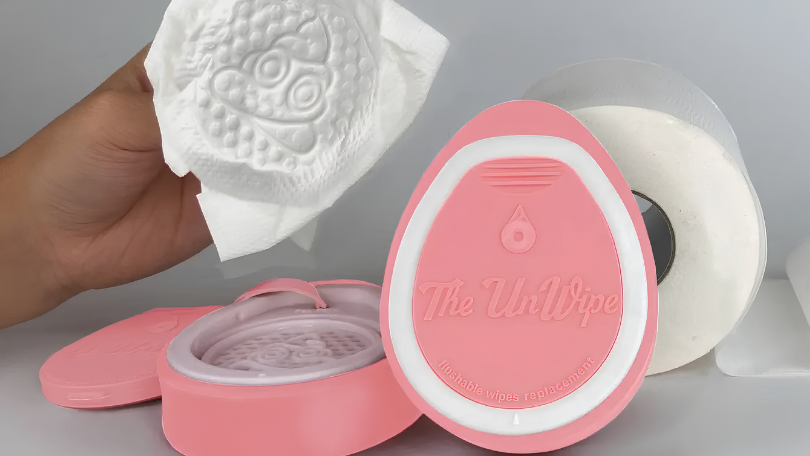
The latest gadget to enter the conversation is The UnWipe, which turns ordinary toilet paper into something that feels more like a wet wipe.
UnWipe CEO Jim Kaslik said he developed the product as an alternative to “flushable” wipes, many of which contain plastic and can cause problems once they disappear down the drain.
According to Good Housekeeping, a 2019 BBC documentary, War on Plastic with Hugh and Anita, found that around 90 per cent of wet wipes contain plastic, aside from their packaging.
While they might seem harmless once flushed, wipes can become a very big problem underground.
Johns Hopkins Bloomberg School of Public Health describes fatbergs as hard clumps of fat and oil mixed with non-flushable items such as sanitary products and wet wipes. These masses can block sewer systems and interfere with wastewater treatment.
Kaslik says the problem comes down partly to how toilet paper and wet wipes are made.
“Toilet tissue is engineered to break down immediately,” he told Green Matters.
“It has tiny fibers and almost no ‘wet strength.’ Wastewater treatment systems are built for that very type of cellulose fiber.”
However, wet wipes, meanwhile, are designed to stay intact when wet.
“They are wet in their (non-recyclable) packaging for months without breaking down. They have longer fibers, the fibers are of different materials than toilet tissue (and even plastic), and the resin that binds them together is stronger,” Kaslik explains.
He also says wipes are “directly adding microplastics by the trillions to the planet.”
Unwipe is a small silicone container with a plant-based cellulose sponge inside.
You take the toilet paper you would normally use, press it into the device, and add around half to three-quarters of a teaspoon of water.
The gadget’s flexible mesh gives the paper a textured surface, while the moisture makes it stronger and more wipe-like.
“We found a way to transform regular toilet tissue – the best and the worst – to have strength, wetness, and texture,” Kaslik said.
According to Kaslik, pressing the toilet paper into the proprietary mesh compresses the paper and makes it firmer, helping it stay together during use.
The design also removes some of the abrasiveness of ordinary toilet paper, which the company says can be useful for people with sensitive skin.
“After years of experimenting with materials and 3D printing, I discovered a combination of water and texture that lets toilet tissue transform to feel and clean like a wipe, minus the problems,” Klasik said.
UnWipe’s outer shell is made from hypoallergenic, non-porous silicone, while the sponge is made from plant-based cellulose. The sponge is designed to remain damp inside the holder for days, so users don’t have to wet the paper from scratch every time.
It still needs cleaning, though.
The company recommends cleaning the sponge at least once a month to avoid bacterial build-up, with options including a dishwasher, vinegar, or a one-minute microwave treatment with water and the lid left open.
Of course, there’s another option that has been around for quite some time: the bidet.
Most countries have bidet automatically installed or part of any structure’s architecture, but in places that don’t have it by default, UnWipe is pitching itself as a middle ground between dry toilet paper and disposable wet wipes.