Could traditional throw-away batteries soon become a thing of the past?
Researchers at the University of Cambridge Department of Biochemistry, in collaboration with bio-designer Lucia Giron, have developed prototypes of algae-based biophotovoltaic cells intended as an alternative to small disposable chemical batteries.
The devices, “biocells”, generate electric current continuously using cyanobacteria, commonly known as blue-green algae.
The microorganisms obtain energy through photosynthesis, using sunlight and carbon dioxide.
According to the development team, the living organisms remain unharmed during electrical generation and have maintained continuous power production for over six years in laboratory testing.
The prototypes include functional demonstrator units connected to low-power electronics, including a clock radio and a temperature sensor.
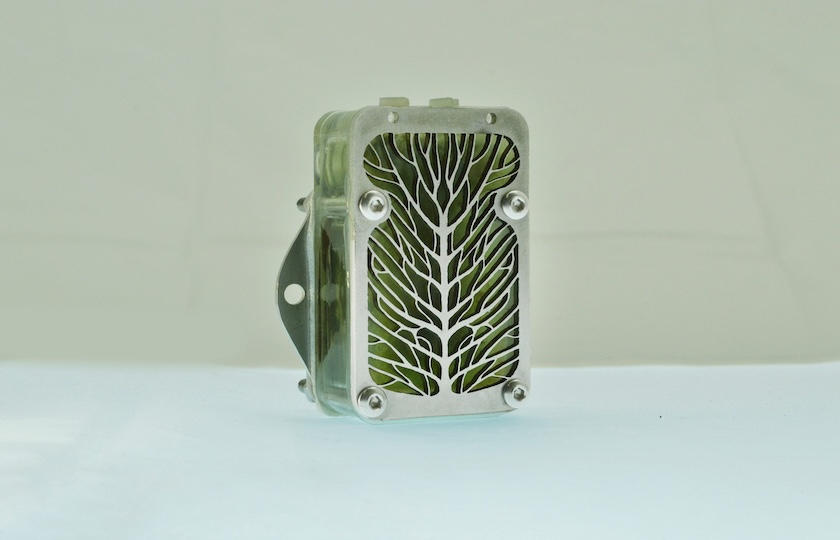
The mechanical design features a transparent casing that allows light exposure required for photosynthesis, combined with a semi-permeable membrane that enables gas exchange while preventing liquid evaporation.
Inside the casing, a filamentous electrode provides a textured surface for the algae to attach and transfer electrical energy.
The front plate features a leaf-vein design and can be detached for disassembly, recycling, or component reuse.
Commercial development of the technology will be managed through a spin-out company named e-Pho.
The project aims to reduce environmental contamination associated with the mining and disposal of conventional single-use batteries.