Recycling plastics remains one of the biggest challenges in a circular economy.
Because plastics vary widely and degrade over time, traditional recycling often blends multiple materials, producing unstable outputs that cost more to recycle than replace.
“It is cheaper just to make a new plastic product than to collect it and recycle it or reuse it,” said Kristian Syberg, a researcher at Roskilde University. “That’s a systemic problem.”
Now, a research team at the Georgia Institute of Technology has found a way to make recycled plastics stronger, more consistent, and cheaper to use – by copying the structure of seashells.
Learning from nature
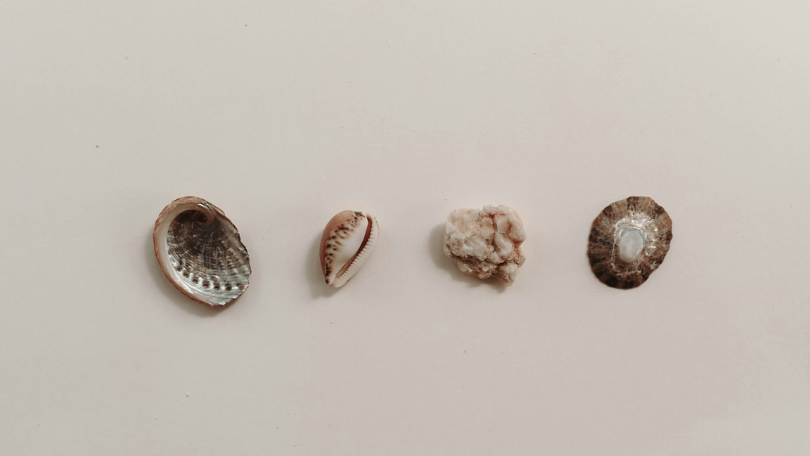
The team, led by Christos Athanasiou, assistant professor of aerospace engineering, studied nacre, or mother-of-pearl. While nacre looks irregular on the inside, that imperfection is what makes it strong.
Nacre is made from brittle materials held together by soft proteins. This combination of hard ‘bricks’ and soft ‘mortar’ allows shells to absorb and spread stress, preventing cracks from spreading.
Using the same principle, the researchers designed a new plastic composite. In their model, recycled plastics form the stiff ‘bricks’, while small amounts of virgin plastic act as the soft ‘mortar’ that holds the structure together.
By carefully placing these softer interfaces, the material is better able to distribute stress, reducing the inconsistencies that usually weaken recycled plastics.
Promising early results
In early testing, the team used recycled high-density polyethylene (HDPE) as the stiff component. The material performed well in tension tests, showing more than a 68 per cent reduction in variability in maximum elongation.
Researchers believe this approach could enable manufacturers to replace substantial quantities of virgin plastic with recycled material without sacrificing performance.
According to estimates cited by Interesting Engineering, it could also cut plastic packaging material costs by nearly 50 per cent.
“By focusing on design-enabled variability suppression, the model offers a sustainable path to consistent performance,” the researchers noted.
“This unlocks broader industrial use of recycled plastics and helps address the global plastic waste crisis.”
Beyond Earth
The team sees potential applications beyond packaging and consumer goods, as they see this innovation could be helpful in aerospace.
In the long term, they say this material could support initiatives such as the NASA Lunar Recycling Challenge, which aims to develop high-performance recycled materials for use in space missions.