A London startup has developed a leather alternative made from waste grain left over from beer and whisky production, offering a new use for one of the brewing industry’s most abundant byproducts.
Arda Biomaterials has created a material called New Grain by transforming brewer’s spent grain, also known as draff, into a soft, durable leather.
The company says the material could provide an alternative to both animal leather and synthetic leather, which is typically made using petroleum-based plastics such as polyurethane.
Unlike many plant-based leather alternatives that rely on plastic binders or coatings to improve performance, Arda says New Grain remains entirely plastic-free.
“We are one of the extremely few solutions that have remained completely plastic-free,” said Camelia Hamdi-Cherif, commercial lead at Arda Biomaterials.
“The interim class of materials still ended up having to rely on adding different petrochemical or plastic binders or top coats to perform, and that’s kind of become the standard,” she said.
“We really don’t see that as a long-term solution, and neither do customers in textiles and fashion.”
The idea emerged when founders Edward ‘TJ’ Mitchell and Brett Cotten began experimenting with biomaterials and looked for a locally available waste stream.
They turned to brewer’s spent grain, a low-value byproduct typically used as animal feed. Although often discarded, the grain contains significant amounts of protein.
Arda developed a proprietary process that isolates and restructures those plant proteins to behave more like the collagen found in animal leather.
“Plant proteins come in this really coiled up, kind of messy state,” Hamdi-Cherif explained.
“We basically unravel these fibres into longer chains and then link them to each other, so that you get the building blocks for something that looks like collagen.”
The resulting material is blended with bio-based ingredients, coloured using natural pigments, and textured to mimic traditional leather finishes before being attached to a natural textile backing.
According to Arda, New Grain has a carbon footprint that is 96 per cent lower than cow leather and 72 per cent lower than synthetic leather. The company is also testing the material’s biodegradability against industry standards.
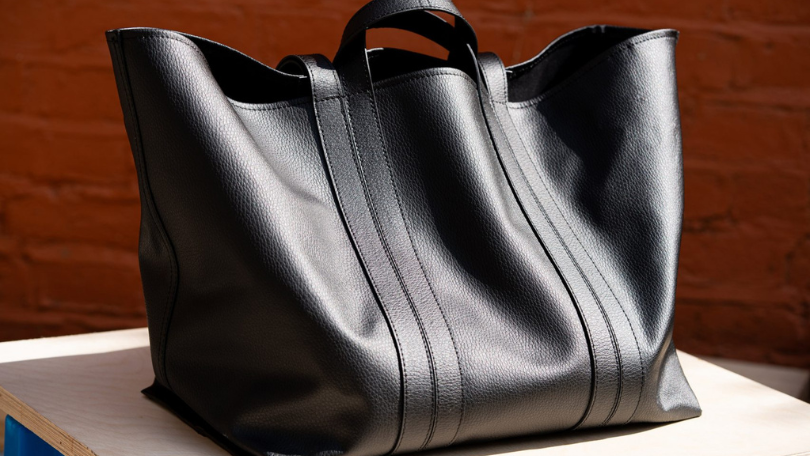
The startup has already demonstrated the material in products, including handbags and tennis racquet covers, through a partnership with Been London.
For now, Arda is focusing on smaller accessories such as wallets and bags before expanding into sectors that require higher-performance materials, including footwear, furniture, and automotive interiors.
The company plans a limited commercial launch this year and has established partnerships with AB InBev and Diageo to support grain sourcing and product development.
Hamdi-Cherif said New Grain is currently priced closer to luxury animal leather, but the company expects costs to fall as production scales.
“Our projections for roll-to-roll manufacturing are that we’ll be able to get really, really competitive unit costs that we hope should rival synthetics in the next three to four years,” she concluded.