
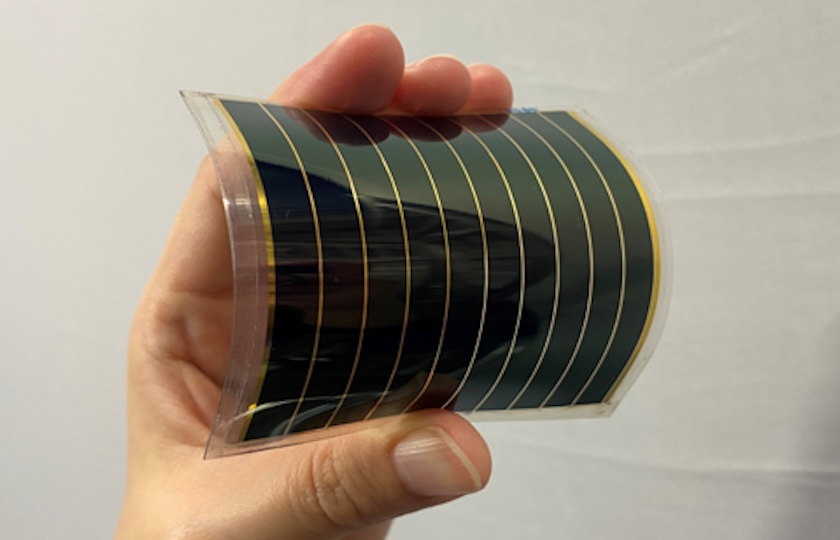
Japan is scaling the deployment of ultra-thin, flexible solar cells manufactured via high-speed, roll-to-roll printing techniques to bypass the weight and structural limitations of conventional silicon hardware.
The production methodology uses metal-halide perovskites,a material class defined by a high-efficiency crystal structure,to print or paint light-absorbing compounds directly onto ultra-thin film or sheet glass substrate.
The resulting pliable sheets are one millimetre thick and weigh one-tenth as much as standard silicon units. This reduction eliminates the need for the heavy, reinforced glass-and-metal framing required by rigid panels.
By replacing traditional assembly lines with newspaper-style printing presses, manufacturers can increase production throughput while reducing fabrication costs.
The physical flexibility and lower weight profile allow the hardware to be integrated into dense, mountainous urban centres by using existing structures, such as warehouse walls, bridges, and transit shelters, without requiring dedicated land clearings.
To standardise infrastructure integration, Japan’s New Energy and Industrial Technology Development Organization (NEDO) has issued comprehensive engineering, design, and construction guidelines.
The documentation outlines safety and reliability frameworks for deploying flexible solar arrays onto low-load rooftops, windows, and vertical walls that cannot support traditional solar installations.
Supported by federal subsidies directed toward industrial manufacturers, including Sekisui Chemical, the Japanese government has established a national target to deploy 20 gigawatts of flexible perovskite capacity by 2040.
The targeted energy volume is equivalent to the power output of approximately 20 conventional nuclear reactors.